
Our editorial team follows strict guidelines to ensure accuracy and objectivity. Learn more about our process.
Landlord insurance cost typically runs $800–$2,500 per year for a single-family long-term rental, with most mid-market properties landing between $1,000 and $1,500. That is 15–25% more than a comparable owner-occupied homeowners policy on the same building—the rental premium reflects tenant turnover, vacancy periods, and the liability exposure of a third party living in your property.
The range is wide because the variables are real. A newer home with a five-year-old roof in Ohio carries a very different premium than a 1960s rental in a Gulf Coast wind zone. The carrier you choose matters too—bundling the rental with your primary home policy at Travelers, Nationwide, or Liberty Mutual often produces a lower net cost than a standalone policy, but Steadily's monoline option is typically the best-priced option for landlords who do not have a prior relationship with one of those carriers.
As an independent agency, Insurance Geek quotes landlord insurance through our appointed P&C stack—Travelers, Nationwide Landlord Protector, Liberty Mutual, and Steadily—and runs your property against whichever carrier produces the right form and the best price for your occupancy situation.
Key Takeaways
Most single-family long-term rentals run $800–$2,500 per year; $1,000–$1,500 is the typical mid-market range
Landlord policies cost 15–25% more than owner-occupied homeowners insurance on the same building
State, roof age, dwelling value, and deductible choice drive most of the price variation
Bundling with Travelers, Nationwide, or Liberty Mutual can lower cost if you already carry your primary home there; Steadily is typically the best-priced monoline option
Loss-of-rents coverage is usually an endorsement that adds cost but protects cash flow during a claim
Average Landlord Insurance Cost
Most landlords budget for a premium 15–25% above what they paid for homeowners insurance on the same building. The additional cost reflects the underwriting differences between owner-occupied and non-owner-occupied risk.
| Property profile | Typical annual cost |
|---|---|
| Newer single-family, low-risk state, $200K dwelling | $800–$1,100 |
| Mid-market single-family, average state risk, $300K dwelling | $1,100–$1,500 |
| Older home, hail/storm-prone state, $300K dwelling | $1,500–$2,000 |
| Coastal or high-wind zone, any age, $400K dwelling | $1,800–$2,500+ |
These ranges reflect standard long-term single-family rentals with liability and a standard deductible. Loss-of-rents coverage, lower deductibles, and older roofs push toward the top of each band. Newer construction, higher deductibles, and bundled multi-policy discounts pull toward the bottom.
What Drives Landlord Insurance Cost
State and location
Where the property sits is the single biggest variable. Wind, hail, hurricane, and tornado risk are priced into every policy at the ZIP level. Landlords in Oklahoma, Texas, Florida, and Gulf Coast states consistently pay at the high end. Midwest and Mountain West states with low natural disaster exposure pay less.
Crime rates in the property's ZIP affect both the liability and property portions of the premium. Carriers use this data at the underwriting stage—there is no overriding it.
Dwelling coverage limit
Your premium scales with your dwelling limit. The limit should reflect rebuild cost—what it costs to reconstruct the structure at today's labor and materials prices—not market value or purchase price. Underinsuring to lower the premium is a common mistake that leaves you short after a total loss.
Roof age and condition
Roof age is the most controllable cost driver. A roof under five years old earns a meaningful discount at most carriers. A roof over 20 years old may trigger surcharges, a reduced payout schedule (actual cash value instead of replacement cost), or a declining of the risk entirely. If your rental has an aging roof, replacing it before binding a new policy can pay back through premium savings within a few years.
Deductible
Higher deductibles lower premiums. Moving from a $500 deductible to a $2,500 deductible on a $300,000 dwelling typically reduces annual premium by 10–20%. The tradeoff is more out-of-pocket exposure per claim. Landlords with cash reserves and newer properties tend to carry higher deductibles; those with tighter margins or older buildings stay lower.
Loss-of-rents endorsement
Most base landlord policies do not automatically include loss of rental income—it is usually an endorsement. Adding it costs $50–$150 per year for typical coverage limits (often 12 months of gross rent or a percentage of the dwelling limit). Given that a serious claim can make a unit unlivable for 3–6 months, this is one of the endorsements worth carrying.
Occupancy type and lease length
Long-term leased single-family rentals are the standard risk. Month-to-month leases, furnished rentals, and short-term rentals are priced higher or may require specialty markets. Vacant properties between tenants often trigger vacancy clauses; extended vacancy may require a vacancy endorsement at additional cost.
See what your rental property would cost to insure.
Start a quote with your rental address and property details—we'll run it across our appointed carriers and show you real numbers.
Don't have time to run a quote? Just send us your policy
Share your current policy declarations pages with us in two clicks. Takes about 30 seconds. We'll review your coverage, find gaps, and compare our carriers to your current policy.
Connect your policy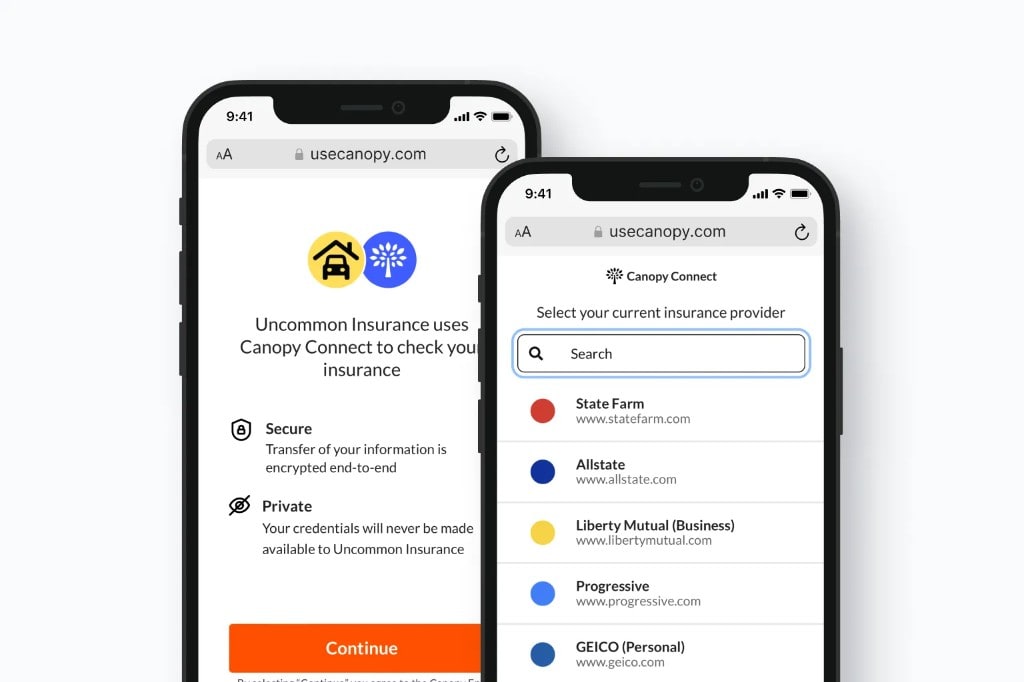
Bundled vs Monoline: How Carrier Choice Affects Cost
The biggest pricing decision for most landlords is not which coverage limits to choose—it is whether to bundle or go monoline.
Bundled carriers (Travelers, Nationwide, Liberty Mutual) offer multi-policy discounts when you add a landlord policy to an existing home and auto relationship. The discount typically applies to both the rental and your primary home policy. If you already carry your personal lines with one of these carriers, the bundled landlord rate is usually the most competitive option and the path of least resistance.
The constraint: these carriers typically require you to carry your primary homeowners policy with them first. If you do not have an existing relationship, they may decline the rental or require you to move your primary home policy to qualify. That is a meaningful friction point for landlords who are shopping their rental independently.
Steadily is built specifically for non-owner-occupied residential property and writes monoline—no prior policy required. For landlords who do not have their primary home with a bundling carrier, or who simply want a purpose-built rental policy on its own, Steadily is typically the best-priced standalone option in our appointed stack.
The right answer depends on what you already carry. We quote both paths and show you the actual premium before you decide.
Expert Tip: The roof question that changes your landlord insurance quote
The biggest swing factor I see on landlord insurance quotes is the roof. A rental with a roof over 15 years old consistently comes in at the high end of the range—and some carriers either add a significant surcharge or move to actual cash value settlement, which can leave you well short of rebuild cost after a major claim. Before you bind a policy on a rental with an older roof, it's worth running the math on whether a new roof before closing pays back through premium savings and full replacement cost coverage.
—Brad Cummins, Insurance Geek Founder
How to Lower Your Landlord Insurance Cost
The most effective levers, in order of impact:
- Bundle if you can — if your primary home is already with Travelers, Nationwide, or Liberty Mutual, adding the rental there usually produces the best bundled rate
- Raise the deductible — moving from $500 to $1,000 or $2,500 reduces premium meaningfully if you have the cash reserves to cover it
- Document and report a recent roof replacement — carriers may not have this on file; updating it at renewal can drop the premium immediately
- Install security and fire monitoring — central-station monitored smoke alarms and security systems earn credits at most carriers; some require proof of monitoring contract
- Maintain a claims-free record — a landlord policy with no claims in the past three to five years earns a credit at most carriers; filing small claims resets this and can trigger surcharges
Landlord Insurance Cost vs Homeowners Insurance Cost
The premium difference between a landlord policy and an HO-3 on the same building is real but not dramatic. The 15–25% uplift exists because the carrier is accepting occupancy risk they cannot control—tenant behavior, vacancy between leases, and the liability of a third party living in the building.
A $1,200 homeowners premium on a property you live in might translate to $1,400–$1,500 as a landlord policy on the same home after you move out. The form is different, the coverage is purpose-built for the rental risk, and the claim will actually pay. For most landlords, the cost difference is less important than having the right policy form in place before the first tenant signs a lease.
For full context on what landlord insurance covers and which carriers write it, see landlord insurance. For primary-residence pricing, see homeowners insurance cost.
Conclusion
Landlord insurance costs more than owner-occupied homeowners insurance on the same building because the risk is genuinely different—tenant occupancy, vacancy periods, and third-party liability add up. The $200–$400 per year premium difference is not a reason to carry the wrong form; a denied claim on a rental property covered only by an HO-3 costs far more than the savings.
The specific number for your rental depends on where it sits, how old the roof is, what you carry elsewhere, and which carrier you qualify for. Bundled pricing through your existing home and auto carrier is usually the most competitive if that relationship exists. If it does not, Steadily's monoline option is purpose-built for this situation and typically well-priced.
At Insurance Geek, we quote across our full appointed stack and match your rental to the carrier that produces the right form and the best price for your occupancy situation—before you bind, not after a claim. Start a quote below with your rental address and property details.
Don't have time to run a quote? Just send us your policy
Share your current policy declarations pages with us in two clicks. Takes about 30 seconds. We'll review your coverage, find gaps, and compare our carriers to your current policy.
Connect your policyFAQ
About Brad Cummins

Brad Cummins is the founder of Insurance Geek and primary author of its educational content. Licensed since 2004, he brings over 21 years of experience structuring life insurance and IUL strategies for clients nationwide.
Fact checked by Brianna Baiocco

Brianna Baiocco runs P&C operations at Insurance Geek and fact-checks property and casualty content. Licensed since 2009, she brings over 16 years of experience in auto, home, renters, and commercial insurance.