

Our editorial team follows strict guidelines to ensure accuracy and objectivity. Learn more about our process.
Pennsylvania is a choice no-fault state. Drivers choose between limited tort (lower premiums, restricted right to sue for pain and suffering) and full tort (higher premiums, full right to sue). Every driver must carry first-party benefits (FPB), which cover your own medical expenses after an accident regardless of fault. Pennsylvania's minimum liability limits are 15/30/5.
Pennsylvania Minimum Coverage Requirements
| Coverage | Minimum Required |
|---|---|
| Bodily injury liability (per person) | $15,000 |
| Bodily injury liability (per accident) | $30,000 |
| Property damage liability | $5,000 |
| First-party benefits (medical) | $5,000 |
Expert Tip: Choose Full Tort if You Can Afford It
Pennsylvania's limited tort option saves money on premiums, but it restricts your right to sue for pain and suffering after an accident. If you're in a minor collision that causes chronic pain or soft-tissue injuries, limited tort may prevent you from recovering those damages. Full tort is worth the additional premium for most drivers.
—Brad Cummins
UM/UIM note: Uninsured and underinsured motorist coverage is not required in Pennsylvania, but insurers must offer it. Rejecting it requires a written waiver.
Limited Tort vs. Full Tort
| Option | Right to Sue | Premium Impact |
|---|---|---|
| Limited tort | Restricted — can sue only for serious injuries | Lower |
| Full tort | Unrestricted — can sue for any injury including pain and suffering | Higher |
Choosing full tort preserves your right to seek compensation for pain and suffering even in minor accidents. Limited tort saves money upfront but may limit your recovery if you're injured.
What's Required vs. Optional
Required:
- Bodily injury liability (BI) — Pays for injuries you cause to others. Does not cover you or your passengers.
- Property damage liability (PD) — Covers damage you cause to another person's vehicle or property.
- First-party benefits (FPB) — Covers your own medical expenses after an accident, regardless of fault. The minimum is $5,000; higher limits are available. See our PIP coverage guide.
Not required but worth considering:
- UM/UIM — Not mandatory, but must be offered. Covers you if hit by an uninsured or underinsured driver. See our UM/UIM guide.
- Collision — Covers damage to your own vehicle from a crash. Required by most lenders. See collision coverage.
- Comprehensive — Covers non-collision losses: theft, weather, animal strikes, vandalism. See comprehensive coverage.
Proof of Insurance & Vehicle Registration
Pennsylvania requires proof of insurance at vehicle registration and at any traffic stop. Acceptable proof includes:
- Insurance ID card (physical or digital)
- Policy declarations page
Pennsylvania uses an electronic verification system. Insurers report policy status to the state, and a lapse can trigger a registration suspension notice.
SR-22: If your license is suspended for an insurance violation or certain driving offenses, Pennsylvania may require an SR-22 certificate of financial responsibility. SR-22 requirements typically last three years.
Penalties for Driving Uninsured
| Violation | Consequence |
|---|---|
| First offense | $300 fine; 3-month license and registration suspension |
| Subsequent offenses | Higher fines; longer suspension |
| Driving on suspended registration | Additional fines and penalties |
Reinstating your license and registration requires proof of insurance and payment of all applicable fees.
Cost of Car Insurance in Pennsylvania
Pennsylvania's average annual premium for full coverage runs roughly $1,400–$1,900 per year, depending on driver profile and location. Philadelphia consistently ranks among the most expensive cities in the state due to high population density, theft rates, and litigation frequency.
Rates vary most by:
- Tort election — Full tort policies cost more than limited tort.
- Driving record — At-fault accidents and major violations raise premiums significantly.
- Location — Philadelphia and its suburbs see higher rates than rural central Pennsylvania.
- Vehicle — Financed vehicles require collision and comprehensive.
Use our car insurance calculator to estimate your costs.
Get Free Pennsylvania Car Insurance Quotes
Pennsylvania's tort election is one of the most consequential decisions on your policy — and it's often chosen without much explanation. Full tort preserves your right to sue for pain and suffering; limited tort restricts it. Share your current policy through Canopy Connect and let a licensed agent confirm your tort election is right for your situation.
Don't have time to run a quote? Just send us your policy
Share your current policy declarations pages with us in two clicks. Takes about 30 seconds. We'll review your coverage, find gaps, and compare our carriers to your current policy.
Connect your policy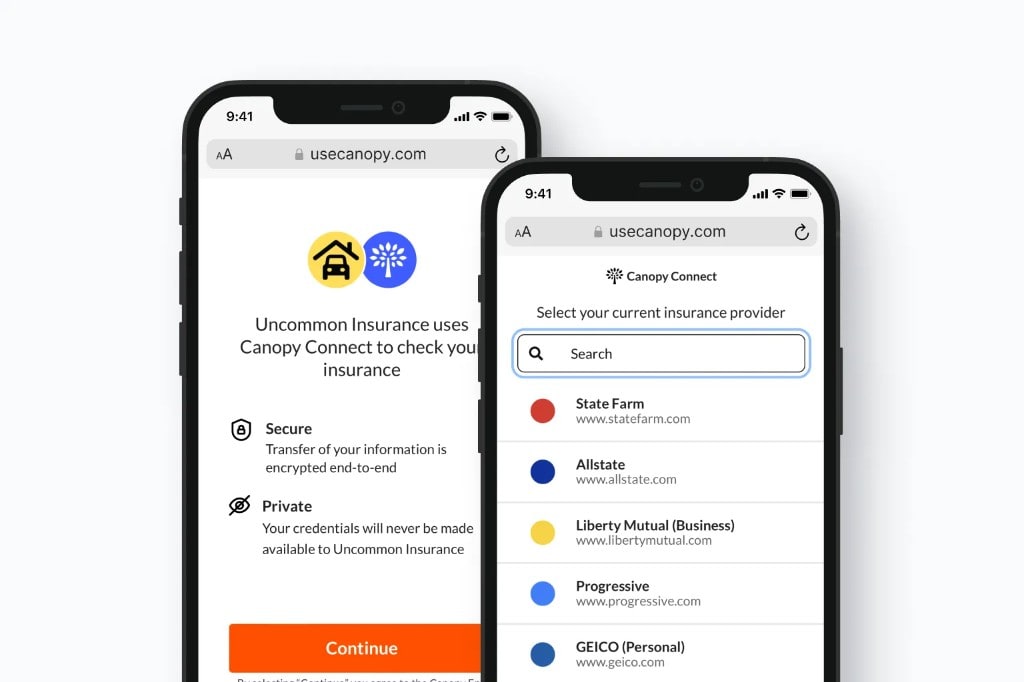
FAQ
About Brad Cummins

Brad Cummins is the founder of Insurance Geek and primary author of its educational content. Licensed since 2004, he brings over 21 years of experience structuring life insurance and IUL strategies for clients nationwide.
Fact checked by Brianna Baiocco

Brianna Baiocco runs P&C operations at Insurance Geek and fact-checks property and casualty content. Licensed since 2009, she brings over 16 years of experience in auto, home, renters, and commercial insurance.