

Our editorial team follows strict guidelines to ensure accuracy and objectivity. Learn more about our process.
Bundling insurance means buying two or more policies—usually homeowners insurance and auto insurance—from one company so you qualify for a multi-policy (bundled) discount. Insurers want the relationship: more lines per household usually means better retention and simpler servicing. For you, that can mean a lower combined bill, one customer portal, aligned billing, and fewer carrier relationships to track.
None of that guarantees savings. Discounts vary by state, carrier, and how each line is priced for your risk profile. A bundle is worth keeping only when the total premium beats what you’d pay by splitting the best home quote and the best auto quote across different carriers. Run both comparisons every time you shop.
Key Takeaways
- Multi-policy discount — A price break when eligible lines (home + auto is the most common) sit with one insurer
- Compare totals — A large “bundle %” can still sit on top of an expensive base rate; compare dollar amounts, not slogans
- Common pairings — Home + auto, renters + auto, condo + auto; motorcycle + auto with some carriers
- Single-deductible scenarios — A few carriers align home and auto so one major event can mean one deductible—confirm in writing; it’s not universal
- Renewal discipline — Loyalty doesn’t always equal lowest price; car insurance discounts and home insurance discounts can stack with bundling when you qualify
What does “bundling” mean?
When people say they want to bundle homeowners and car insurance, they usually mean moving or placing both policies with one carrier so underwriting, billing, and claims stay under that company’s systems. On your declarations page, you’ll often see the credit labeled multi-policy, multi-line, or package discount.
That is different from cobranding or “partner” offers where the marketing looks like one bundle but one line is underwritten by a different insurer. Those arrangements can still save money, but you should know exactly which company backs each policy and how claims are routed before you buy.
You also want both lines from carriers you’re comfortable with on limits: dwelling and liability on the home side, and liability limits on auto that match your assets (and any umbrella requirement your insurer sets).
Why carriers offer bundle discounts
Insurance is a portfolio business. When you hold home and auto with the same group, the carrier has a fuller picture of your risk, fewer acquisition costs per policy, and a stronger reason to keep you at renewal. They’re willing to share some of that back as a discount—especially in competitive states where switching is easy.
That doesn’t make them charitable. The discount is a pricing lever. If their auto rate is high for your tier or their home rate is stiff after a roof/age score, the bundle can still lose to a split placement.
Home and auto insurance bundle (most common)
Most households need both homeowners and auto coverage, so carriers compete hardest on the pair. You’ll see national ads focused on the bundle for good reason: it’s the clearest apples-to-apples cross-sell.
What you might gain beyond price
Beyond a lower combined premium, you may get simpler service: one app, one billing cadence (sometimes aligned renewal dates), and one adjuster relationship if both lines are with the same group. Some carriers market a single deductible when one covered catastrophe damages your home and a vehicle on the same policy stack. Treat that as a question for your agent or policy documents—not a universal rule.
What to watch
Not every insurer sells both personal auto and home in your state. If you’re in a high-risk property zone (coastal wind, wildfire, older roof), the home quote may be non-competitive even after the bundle credit. If you add a young driver or have recent violations, auto can spike independently. In those cases, splitting lines—best home with Carrier A and best auto with Carrier B—often wins.
Some “bundles” are really two brands under one holding company, or a home policy from one paper and an auto policy from a partner. Read the fine print: who is the named insurer on each dec page, and how do you file a claim for each line?
How to bundle home and auto (step-by-step)
- Pull your current declarations for both lines: dwelling limit, deductibles, liability, endorsements, vehicles, drivers, annual mileage, and any umbrella underlying limits.
- Build apples-to-apples quotes: same dwelling replacement approach, same liability (for example 300/500 or 500/500), same deductibles, same rental and UM/UIM where applicable.
- Ask for itemized premiums: home only, auto only, then the bundle credit so you can see what the multi-policy discount is actually worth.
- Compare to split quotes: best standalone home plus best standalone auto. Pick the lower total, not the flashier discount percentage.
- Time the switch: bind new policies before canceling old ones to avoid a lapse (especially on auto). Get cancellation confirmations in writing.
Use our home insurance calculator and car insurance calculator to sanity-check limits before you talk to agents or online flows.
Expert Insight: When the bundle wasn’t the best deal
Brianna compared a bundled quote that advertised a large multi-policy discount. When she asked for itemized premiums, the auto line was priced higher than her best standalone auto quote. Splitting carriers saved her more than the bundle credit was worth—even though the bundle looked cheaper at first glance.
—Brianna Baiocco
Renters and auto bundle
Renters insurance plus auto is structurally the same idea as home plus auto, but renters premiums are usually smaller, so the dollar savings from a multi-policy credit may look modest even when the percentage is similar. You’ll still list drivers, vehicles, and a reasonable personal property estimate for the apartment or house you rent. If you’re early in your financial life, this bundle is often the first “package” carriers pitch—worth taking if the total beats split quotes.
Condo and auto bundle
Condo unit owners typically carry an HO-6-style policy for walls-in coverage, personal property, and liability, while the association carries a master policy for the building shell and common areas. Pairing condo and auto with one insurer follows the same total-cost logic as home plus auto. If your association’s master policy and your unit deed are complicated, an agent who regularly places condo in your state can keep your HO-6 aligned with association requirements while still shopping the auto line for value.
Motorcycle and car insurance bundle
Many carriers that write auto also write motorcycle and may extend a multi-line discount when both are placed together. Motorcycle policies have their own coverage menu: guest passenger, accessory coverage, optional equipment, and sometimes lay-up or reduced coverage for months you don’t ride. Collect quotes that reflect how you actually use the bike, then compare the bundle total to splitting motorcycle specialty carriers against your auto home.
Umbrella and other lines
If you carry umbrella liability above your home and auto, insurers often want your underlying policies with them—or at least minimum liability limits that match their rules. Bundling home and auto first can make umbrella placement smoother and sometimes cheaper, but umbrella pricing still deserves its own annual check. See personal liability coverage for how base limits work before an umbrella layer.
Boat, RV, or secondary homes can add more lines to the same household. Not every carrier bundles every toy; when they do, ask whether the discount applies per policy or only when specific combinations are met.
How to maximize savings (without sacrificing coverage)
Compare multiple carriers and channels
Independent agents can quote several carriers’ bundles; captive agents can bundle deeply within one brand but won’t show competitors. Online comparison flows are fine for a first pass. Regardless of channel, insist on seeing the all-in annual cost for each scenario.
Stack other discounts
Bundling doesn’t replace good-driver, paid-in-full, telematics, home security, or claims-free pricing where available. Our auto discounts and home discounts pages list common credits—many can apply alongside a multi-policy discount if you qualify.
Set deductibles you can actually pay
Higher deductibles reduce premiums on both lines, but you’ll cut the check after a claim. Match deductibles to your emergency fund and tolerance for out-of-pocket costs; don’t chase a bundle with deductibles so high you’d hesitate to file when you need to.
Re-shop at real life events
Buying a home, moving states, adding a driver, replacing a roof, or buying a different vehicle all change risk profiles. Re-quote bundled and unbundled at renewal or after those events; the cheapest structure two years ago may not be the cheapest today.
Mistakes to avoid
- Chasing the advertised “up to” bundle percentage without comparing total dollars
- Assuming one deductible always applies to home and auto in the same storm—verify policy language
- Letting auto lapse while moving home policies (gaps can trigger higher rates or state penalties where coverage is mandatory)
- Ignoring partner-carrier bundles: they can be fine, but know who underwrites what
- Forgetting to match liability limits when comparing quotes (unequal limits make price comparisons meaningless)
Compare & connect
Ballpark your needs with the home insurance calculator and car insurance calculator. When you’re ready to share real dec-page limits and coverages, use the secure policy link below to send your current policies—we’ll review what you have and shop across carriers.
Don't have time to run a quote? Just send us your policy
Share your current policy declarations pages with us in two clicks. Takes about 30 seconds. We'll review your coverage, find gaps, and compare our carriers to your current policy.
Connect your policy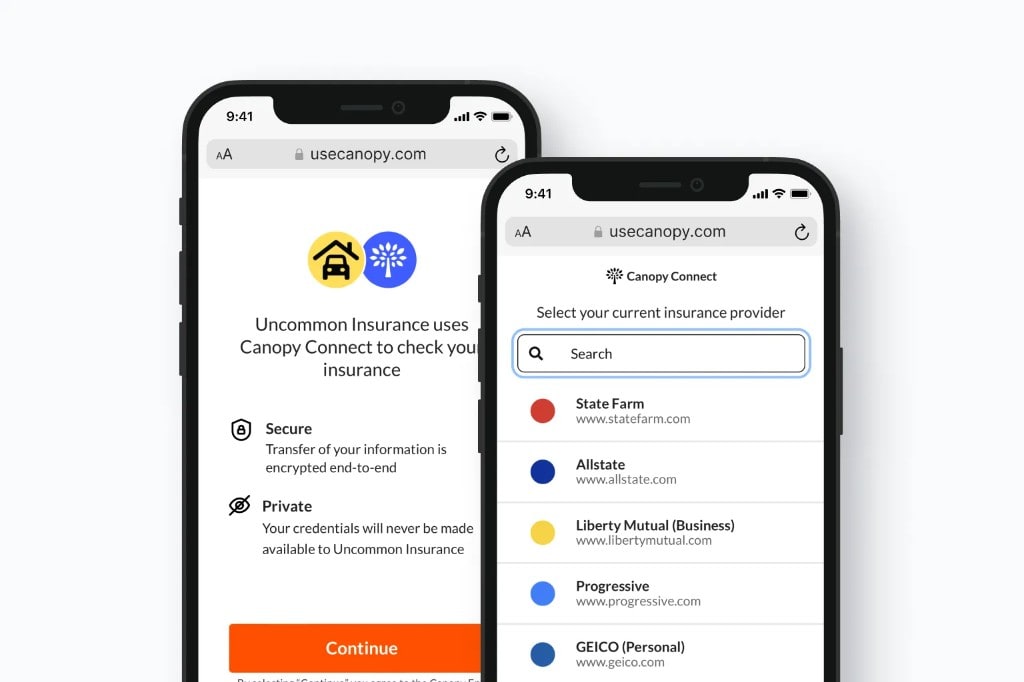
FAQ
About Brad Cummins

Brad Cummins is the founder of Insurance Geek and primary author of its educational content. Licensed since 2004, he brings over 21 years of experience structuring life insurance and IUL strategies for clients nationwide.
Fact checked by Brianna Baiocco

Brianna Baiocco runs P&C operations at Insurance Geek and fact-checks property and casualty content. Licensed since 2009, she brings over 16 years of experience in auto, home, renters, and commercial insurance.