

Our editorial team follows strict guidelines to ensure accuracy and objectivity. Learn more about our process.
State minimums exist to protect other drivers — not you. That distinction matters more than most people realize when they're shopping for the cheapest policy they can find.
Every state sets a floor for how much liability coverage you must carry before legally getting behind the wheel. But those floors were written decades ago in many cases, and they haven't kept pace with what a hospital stay, a totaled SUV, or a lawsuit actually costs in 2026. The $15,000 property damage minimum in California, for example, won't cover most vehicles on the road today — let alone a new one.
As an independent agency working with multiple top carriers in your state, we see the claims side of this regularly. The table below is your reference for what's legally required. The sections after it are what you actually need to make sense of the numbers. When you want to move past the legal floor, the auto insurance hub pulls together coverage explainers, cost guides, and shopping context in one place.
Key Takeaways
- Every state requires some form of auto liability coverage, though New Hampshire and Virginia allow drivers to opt out if they can demonstrate financial responsibility another way
- Florida is the only state with no bodily injury liability minimum — it requires only $10,000 in PIP coverage
- The most common bodily injury minimum is 25/50 ($25,000 per person, $50,000 per accident)
- State minimums haven't kept pace with actual vehicle values or medical costs — a policy at the legal floor is rarely enough coverage
- Some states also require uninsured/underinsured motorist coverage and personal injury protection (PIP) on top of liability
- New Jersey's "basic policy" is uniquely structured — bodily injury liability is optional, not required
Minimum Car Insurance Requirements by State
Limits are shown as bodily injury per person / bodily injury per accident / property damage (BI/BI/PD). Where PIP or UM/UIM is required, it's noted in the Notes column.
| State | BI Per Person | BI Per Accident | Property Damage | Notes |
|---|---|---|---|---|
| Alabama | $25,000 | $50,000 | $25,000 | |
| Alaska | $50,000 | $100,000 | $25,000 | |
| Arizona | $25,000 | $50,000 | $15,000 | |
| Arkansas | $25,000 | $50,000 | $25,000 | UM/UIM required |
| California | $15,000 | $30,000 | $5,000 | |
| Colorado | $25,000 | $50,000 | $15,000 | UM/UIM required |
| Connecticut | $25,000 | $50,000 | $25,000 | UM/UIM required |
| Delaware | $25,000 | $50,000 | $10,000 | PIP required |
| Florida | $10,000 | — | $10,000 | PIP required; no BI minimum |
| Georgia | $25,000 | $50,000 | $25,000 | |
| Hawaii | $20,000 | $40,000 | $10,000 | PIP required |
| Idaho | $25,000 | $50,000 | $15,000 | |
| Illinois | $25,000 | $50,000 | $20,000 | UM/UIM required |
| Indiana | $25,000 | $50,000 | $25,000 | |
| Iowa | $20,000 | $40,000 | $15,000 | |
| Kansas | $25,000 | $50,000 | $25,000 | PIP & UM/UIM required |
| Kentucky | $25,000 | $50,000 | $25,000 | PIP required |
| Louisiana | $15,000 | $30,000 | $25,000 | UM/UIM required |
| Maine | $50,000 | $100,000 | $25,000 | UM/UIM & MedPay required |
| Maryland | $30,000 | $60,000 | $15,000 | PIP & UM/UIM required |
| Massachusetts | $20,000 | $40,000 | $5,000 | PIP & UM required |
| Michigan | $50,000 | $100,000 | $10,000 | PIP required |
| Minnesota | $30,000 | $60,000 | $10,000 | PIP & UM/UIM required |
| Mississippi | $25,000 | $50,000 | $25,000 | |
| Missouri | $25,000 | $50,000 | $25,000 | UM/UIM required |
| Montana | $25,000 | $50,000 | $20,000 | |
| Nebraska | $25,000 | $50,000 | $25,000 | UM/UIM required |
| Nevada | $25,000 | $50,000 | $20,000 | |
| New Hampshire | $25,000 | $50,000 | $25,000 | Insurance optional |
| New Jersey | $15,000 | $30,000 | $5,000 | Standard policy; basic policy BI optional |
| New Mexico | $25,000 | $50,000 | $10,000 | |
| New York | $25,000 | $50,000 | $10,000 | PIP & UM required |
| North Carolina | $30,000 | $60,000 | $25,000 | UM/UIM required |
| North Dakota | $25,000 | $50,000 | $25,000 | PIP & UM/UIM required |
| Ohio | $25,000 | $50,000 | $25,000 | |
| Oklahoma | $25,000 | $50,000 | $25,000 | |
| Oregon | $25,000 | $50,000 | $20,000 | PIP & UM required |
| Pennsylvania | $15,000 | $30,000 | $5,000 | PIP required |
| Rhode Island | $25,000 | $50,000 | $25,000 | |
| South Carolina | $25,000 | $50,000 | $25,000 | UM/UIM required |
| South Dakota | $25,000 | $50,000 | $25,000 | UM/UIM required |
| Tennessee | $25,000 | $50,000 | $15,000 | |
| Texas | $30,000 | $60,000 | $25,000 | |
| Utah | $25,000 | $65,000 | $15,000 | PIP required |
| Vermont | $25,000 | $50,000 | $10,000 | UM/UIM required |
| Virginia | $30,000 | $60,000 | $20,000 | UM/UIM required; uninsured fee alternative |
| Washington | $25,000 | $50,000 | $10,000 | |
| West Virginia | $25,000 | $50,000 | $25,000 | UM/UIM required |
| Wisconsin | $25,000 | $50,000 | $10,000 | UM/UIM required |
| Wyoming | $25,000 | $50,000 | $20,000 | |
| Washington D.C. | $25,000 | $50,000 | $10,000 | UM/UIM required |
What the Three Numbers Mean
When you see a policy listed as 25/50/25, each number represents a different limit in your liability coverage:
The first number is bodily injury per person — the maximum your insurer will pay toward one injured person's medical bills, lost wages, and related costs when you're at fault. The second number is bodily injury per accident — the total your insurer will pay across all injured parties in a single accident, regardless of how many people are involved. The third number is property damage per occurrence — the maximum toward the other driver's vehicle or any other property you damage.
Here's where these limits fall short in practice: if you cause an accident that injures two people seriously, a 25/50 limit means each person could receive at most $25,000 — and the total across both can't exceed $50,000. A single emergency room visit and surgery can exceed that for one person. Any amount over your limit is your personal financial exposure.
Coverage Types Required in Some States
Liability is required everywhere — but several states layer on additional mandatory coverages.
Personal Injury Protection (PIP) covers your own medical bills and lost wages after an accident, regardless of fault. It's required in no-fault car insurance states — Florida, Michigan, New York, New Jersey, Pennsylvania, and several others. In Florida specifically, PIP replaces the bodily injury liability minimum entirely, which creates a coverage structure unlike any other state.
Uninsured/Underinsured Motorist Coverage (UM/UIM) pays when you're hit by a driver who carries no insurance or not enough to cover your damages. About one in seven drivers on U.S. roads is uninsured, according to the Insurance Research Council. States like Illinois, Missouri, Oregon, and Wisconsin require it — but even in states where it's optional, declining it is a real gamble.
Medical Payments (MedPay) is a simpler version of PIP, covering medical expenses for you and your passengers after an accident regardless of fault. Maine is one of the few states that mandates it. In most states it's optional but inexpensive.
Expert Tip: Minimum coverage is a legal floor, not a financial plan
State minimums protect other drivers — not you. I've seen clients cause accidents where damages exceeded their limits by six figures. The liability gap comes out of your pocket. For most drivers, bumping to 100/300/100 costs less than $20 a month more than the state minimum and closes an enormous exposure. That's the conversation worth having before you bind coverage.
—Brad Cummins, Insurance Geek Founder
States With Unique Rules
A few states operate differently enough that they deserve a separate note.
Florida is the only state with no bodily injury liability minimum. Drivers must carry $10,000 in PIP and $10,000 in property damage — that's it. Bodily injury liability is technically optional on the base policy, which creates significant risk for at-fault drivers if they cause serious injuries. Florida also has one of the highest rates of uninsured drivers in the country.
New Hampshire is one of two states where auto insurance is not legally required. Drivers can skip coverage if they can demonstrate financial responsibility (typically proof of sufficient assets). That said, most lenders require it, and most drivers carry it.
Virginia allows drivers to pay an annual Uninsured Motor Vehicle fee instead of carrying insurance — but that fee provides no actual coverage if you cause an accident. It simply allows you to register your vehicle. Virginia raised its minimum liability limits in 2025 to 30/60/20.
New Jersey offers two policy tiers. The basic policy makes bodily injury liability optional and caps property damage at $5,000. The standard policy is what most drivers should carry — but the basic policy's existence means some New Jersey drivers have almost no coverage.
Michigan has among the highest minimum limits in the country (50/100) but also has the most complex no-fault system, with tiered PIP options ranging from $50,000 to unlimited medical benefits.
How Much Car Insurance Do You Actually Need?
The minimum is a legal starting point, not a recommendation.
Most independent agents — including our team — default to recommending 100/300/100 as a baseline for anyone with assets to protect. Here's the practical case: a serious accident with injuries can generate six figures in medical costs and lost wages alone. If your liability limit is 25/50 and the damages are $90,000, the $40,000 gap follows you personally — not your insurer.
Collision and comprehensive coverage aren't required by any state, but if you're financing or leasing a vehicle your lender almost certainly requires them. If you own your car outright, the decision depends on the vehicle's value versus the cost of carrying the coverage.
The right coverage level depends on your assets, your state's rules, and what you're driving. For a national cost picture before you compare quotes, see average car insurance costs by scenario. Comparing options across multiple carriers in your state is still the fastest way to see where the gaps are and what it actually costs to close them.
Don't have time to run a quote? Just send us your policy
Share your current policy declarations pages with us in two clicks. Takes about 30 seconds. We'll review your coverage, find gaps, and compare our carriers to your current policy.
Connect your policy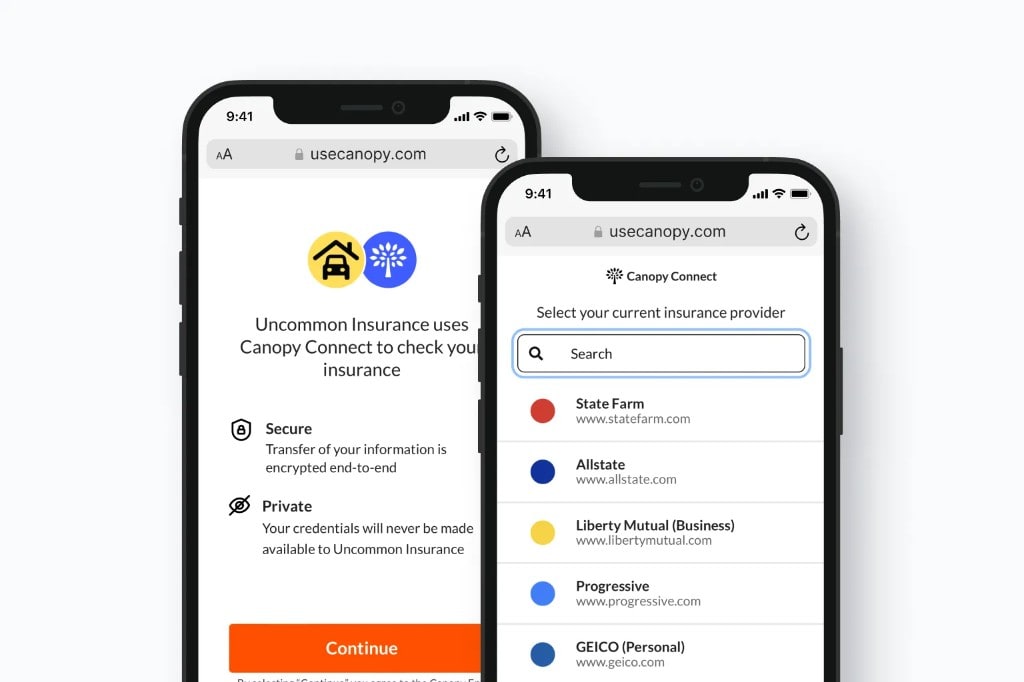
FAQ
About Brad Cummins

Brad Cummins is the founder of Insurance Geek and primary author of its educational content. Licensed since 2004, he brings over 21 years of experience structuring life insurance and IUL strategies for clients nationwide.
Fact checked by Brianna Baiocco

Brianna Baiocco runs P&C operations at Insurance Geek and fact-checks property and casualty content. Licensed since 2009, she brings over 16 years of experience in auto, home, renters, and commercial insurance.