
Our editorial team follows strict guidelines to ensure accuracy and objectivity. Learn more about our process.
How to buy renters insurance is a quick process once you make two decisions: (1) your coverage limits and (2) your deductible. From there, the smartest move is comparing the same coverage selections across multiple top-rated carriers so you can choose the best value and bind the policy confidently.
If you’re brand new to renters coverage, this will help you understand where to start. If you want to understand how pricing works after you’ve chosen your coverage limits and deductible, see our renters insurance cost guide. .
Key Takeaways before you shop
Your landlord’s policy covers the building—not your stuff—so you’re responsible for choosing a personal property limit that fits what you own. Property owners need landlord insurance on the rental itself.
Replacement cost coverage is usually the best “buying decision” because it can pay to replace items today—not their depreciated value.
Liability is often the biggest financial risk in renting; pick a limit that protects your income and savings, not just the minimum.
The best policy is the one with the right limits and deductible at the best price from a top-rated carrier—based on an apples-to-apples comparison.
Coverage decisions to make before you buy
Most renters policies include the same core parts, but the way you set limits is what determines whether the policy actually helps when something happens. For a full breakdown (including common exclusions), see what renters insurance covers. Here’s what matters during the buying process:
Personal property (choose a realistic limit)
Your personal property limit is the pool of money for your belongings—furniture, clothing, kitchen items, electronics, and everything else you’d have to replace. The most common buying mistake is choosing a number that “sounds fine” instead of what replacement would actually cost.
If you’re shopping because of a specific concern, these guides help you confirm what’s typically included and what exclusions to watch:
- Does renters insurance cover theft?
- Does renters insurance cover water damage?
- Does renters insurance cover electronics?
- Does renters insurance cover power outages?
Liability + medical payments (buy enough to protect your finances)
Liability coverage helps if someone is injured in your rental or you accidentally damage someone else’s property. When you’re buying, the key decision is choosing a limit that would protect your savings and future income if a lawsuit happened. Medical payments can help cover smaller injuries (like a minor ER visit) regardless of fault.
Loss of use (confirm it’s included)
Loss of use can help with extra costs (temporary housing, meals, etc.) if a covered claim makes your home unlivable. When you’re buying, confirm it’s included and understand that your deductible still applies.
Expert Tip: Don’t underinsure the boring stuff
Most renters forget the “little” items—shoes, cookware, bedding, toiletries, and small electronics. Those categories add up fast. Do a quick room-by-room tally before you choose your personal property limit.
—Brad Cummins, Insurance Geek Founder
How much renters insurance do you need?
This is where most people miss. They pick a low number, save a few bucks, and only realize it’s not enough after a loss. Here’s how Insurance Geek specialists tell clients to set limits quickly.
Step 1: Set your personal property limit
Do a simple inventory. You don’t need a spreadsheet marathon—just estimate replacement cost by room. A “normal” one-bedroom often lands in the $20,000–$35,000 range once you include everything, but your number could be lower or much higher.
Step 2: Choose replacement cost vs actual cash value
ACV pays for depreciated value. Replacement cost pays what it costs to replace your items today. Replacement cost is usually the better option if you want the policy to actually solve the problem when something happens.
| Claims payout option | What it means for you |
|---|---|
| Actual Cash Value (ACV) | Lower premium, but payouts can fall short because depreciation reduces what you receive. |
| Replacement Cost | Usually a bit more per month, but the payout is closer to what you need to replace your belongings today. |
Step 3: Pick a liability limit you can live with
Many policies start around $100,000, but we often see $300,000+ make sense depending on your situation. A simple rule: pick a limit that would protect your income and savings if a lawsuit happened.
Step 4: Choose a deductible that fits your budget
Your deductible is what you pay first on a covered claim. Higher deductible usually means a lower premium. The right deductible is the one you could pay tomorrow without stress.
How to buy renters insurance
Most top-ranking pages get this right: renters insurance buying is a short process when you know what you need. The main difference is whether you shop one company at a time—or compare multiple options with the same coverage selections.
1) Gather the info you’ll need
Have this ready and the quote process moves fast:
- Your address and unit details (apartment, condo rental, single-family rental)
- Estimated personal property limit + whether you want replacement cost
- Preferred deductible range
- Basic resident info (names, DOBs) and any pets
That’s enough for most quotes. If your landlord requires proof, they may ask for your liability limit and the effective date.
2) Compare quotes from multiple top-rated carriers
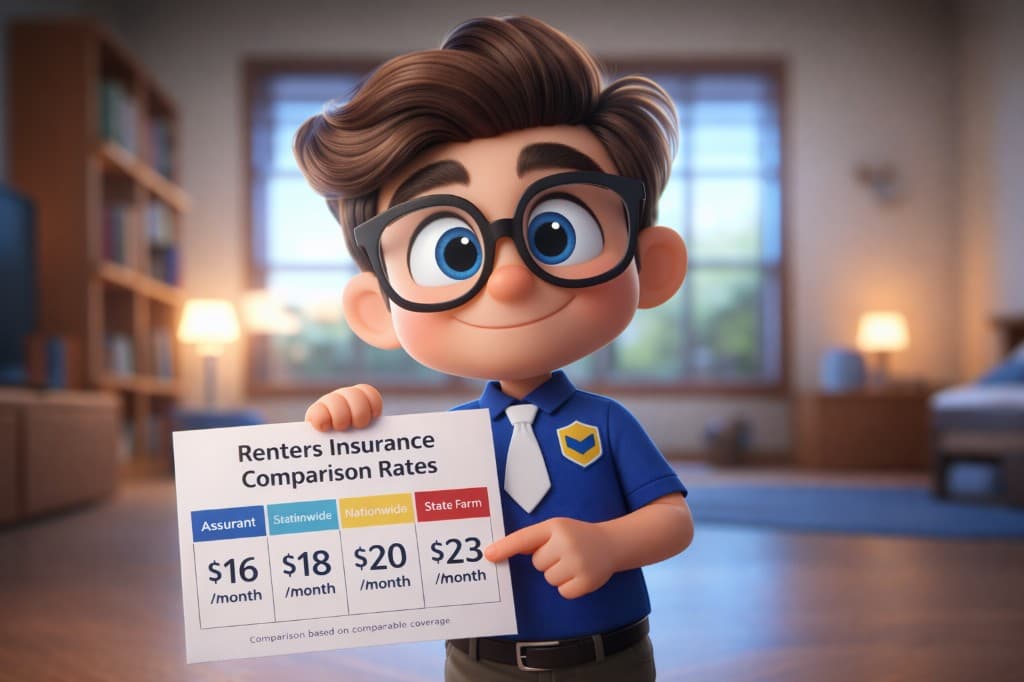
Every carrier prices risk a little differently. That’s why “cheap” is personal—your best rate depends on your location, building type, claims history, and more. The goal is an apples-to-apples comparison: same limits, same deductible, then choose the best value.
Compare options here: renters insurance quotes
3) Check the policy details that actually matter
Before you bind coverage, confirm these items match what you intended:
- Personal property limit and payout type (replacement cost vs ACV)
- Liability limit (and whether it meets any landlord requirement)
- Deductible amount
- Any category limits for valuables (jewelry, computers, collectibles)
If you own higher-value items, you may need an endorsement (scheduled personal property) so those items aren’t limited by standard category caps.
4) Bind the policy and get proof of insurance
Once you select the right option, you can usually bind coverage online immediately. Proof of insurance is typically available right away, so you can upload it to your leasing portal or send it to your property manager.
Before you bind: final checks that prevent surprises
Once you’ve gathered your information and compared options, take a minute to double-check these details before you bind the policy. This is where most buying mistakes happen.
Confirm the policy matches your selections
- Personal property limit reflects what you actually own
- Replacement cost (not ACV) is selected if that’s what you intended
- Liability limit meets any landlord requirement
- Deductible is an amount you could comfortably pay if a claim happened tomorrow
Check category limits for valuables
Standard policies often cap payouts for certain items like jewelry, computers, collectibles, or specialty electronics. If you own higher-value items, confirm whether you need a scheduled personal property endorsement before you bind.
Set the correct effective date
Make sure the policy start date aligns with your lease or landlord requirement. You can usually buy renters insurance ahead of time and set coverage to begin on your move-in date.
Get proof of insurance right away
Most policies provide proof of insurance immediately after binding. Download it or send it to your landlord or property manager so there are no delays with move-in or lease approval.
Once these boxes are checked, you’re ready to bind coverage. If you haven’t compared options yet, start here: compare renters insurance quotes.
Common renters insurance mistakes
We see the same problems over and over—usually because renters are trying to get it done fast (which is fair). Avoid these and you’ll be ahead of most people:
Underestimating how much you own
If you set personal property too low, you’re basically self-insuring the difference. A quick room-by-room estimate fixes this.
Choosing ACV to save a few dollars
ACV feels fine until claim day. Replacement cost is usually the move if you want fewer surprises.
Picking the lowest liability limit by default
Liability is often the biggest financial risk in renting. Don’t treat it like an afterthought.
Next step: compare renters insurance quotes
Once you know your limits and deductible, the fastest way to buy renters insurance is to compare multiple top-rated carriers with the same coverage selections—then bind the option that gives you the best value.
Start here: compare renters insurance quotes
Frequently Asked Questions
Renters insurance built for speed and convenience
Get a quick quote, see pricing for your rental, and finish online in one flow. We partner with Assurant so you can go from numbers to coverage without phone tag.
Get renters insurance in under 2 minutes
See your price, choose coverage, and download proof instantly. Get your policy now.

About Brad Cummins

Brad Cummins is the founder of Insurance Geek and primary author of its educational content. Licensed since 2004, he brings over 21 years of experience structuring life insurance and IUL strategies for clients nationwide.
Fact checked by Brianna Baiocco

Brianna Baiocco runs P&C operations at Insurance Geek and fact-checks property and casualty content. Licensed since 2009, she brings over 16 years of experience in auto, home, renters, and commercial insurance.