Auto Insurance Coverages
Learn liability vs physical damage, state minimums, UM/UIM, collision, comprehensive, PIP, and how to choose limits—with key takeaways and FAQs.
“Understanding your coverage options helps you choose the right protection for your vehicle and your budget.”
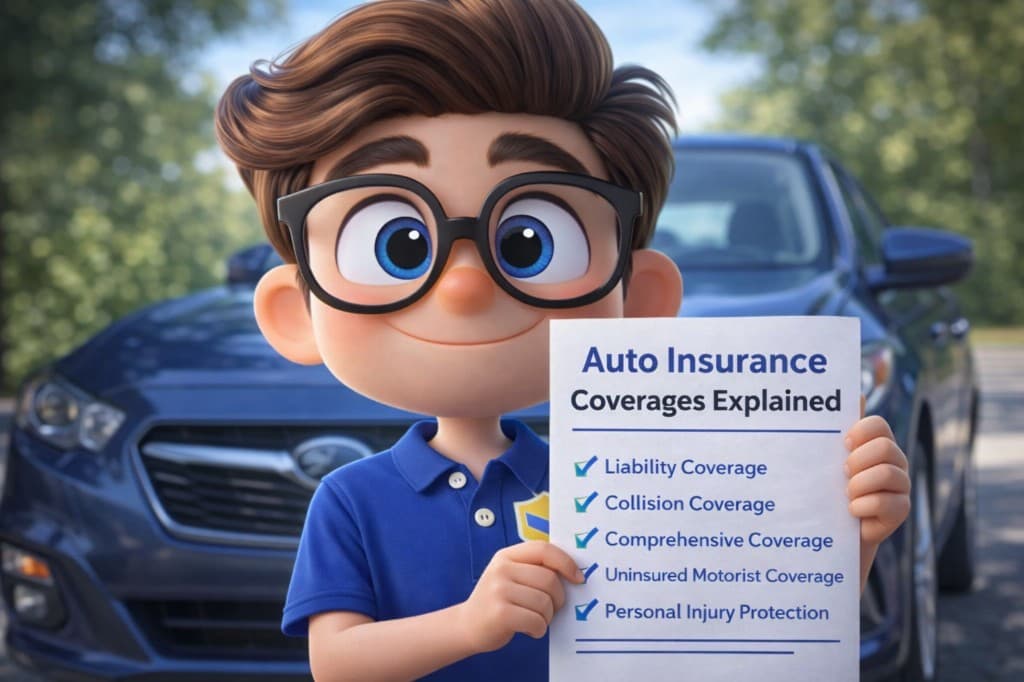
All US states require some basic auto insurance coverage so you’re protected financially in a crash—whether your car is damaged or you hurt someone else or damage their property.
This guide summarizes each coverage type, links to deep dives, and shows how to choose limits—without repeating what’s on your individual coverage pages.
Coverage Types
Bodily injury liability
Covers injuries you cause to others in an at-fault accident.
Learn more →Property damage liability
Covers damage you cause to others' vehicles and property.
Learn more →Personal injury protection (PIP)
Medical expenses and lost wages for you and passengers.
Learn more →Uninsured / underinsured motorist
Protection when the other driver has no or insufficient insurance.
Learn more →Collision coverage
Repairs to your vehicle when you hit another car or object.
Learn more →Comprehensive coverage
Theft, vandalism, weather, and other non-collision damage.
Learn more →State minimum limits
Required coverage amounts by state.
Learn more →What Does Car Insurance Cover?
Auto insurance breaks down into two main types:
- Liability coverages – Protect others when you cause an accident
- Physical damage coverages – Protect your own vehicle from damage
Liability coverages are typically required by law. They include bodily injury, property damage, personal injury protection (PIP), medical payments (Med Pay), and uninsured/underinsured motorist coverage.
Physical damage coverages are mostly optional and pay to repair or replace your car. They include collision, comprehensive, and add-ons like towing, roadside assistance, and gap coverage. If you lease or finance a vehicle, your lender will usually require both collision and comprehensive.
Key Takeaways
- Liability (bodily injury, property damage, and often PIP/Med Pay, UM/UIM) is required or strongly recommended in most states; collision and comprehensive are usually optional unless you finance or lease
- State minimum limits are a legal floor—many drivers need higher liability limits for real-world claims
- UM/UIM covers you when the at-fault driver has no insurance or not enough; it’s required in some states and wise everywhere
- “Full coverage” usually means liability plus collision plus comprehensive—it’s shorthand, not a formal policy type
- Personal auto insurance is for everyday driving; rideshare, delivery, and commercial use need extra coverage
- Use state minimum limits as a baseline (see How to Choose the Right Coverage below), then adjust limits and deductibles to your budget and risk
Liability Coverages Explained
Bodily injury liability
Pays for injuries you cause to others in an at-fault accident—the other driver, their passengers, pedestrians, or cyclists. Required in almost every state. Learn more about bodily injury →
Property damage liability
Pays for damage you cause to someone else's vehicle or property—their car, a fence, a building. Required in every state that mandates auto insurance. Learn more about property damage →
Personal injury protection (PIP)
Pays for your and your passengers' medical expenses and lost wages after an accident, regardless of fault. Required in no-fault states; optional elsewhere. Learn more about PIP →
Medical payments (Med Pay)
Pays for medical expenses for you and your passengers, regardless of fault. Simpler than PIP—medical only, no lost wages. Optional in most states. Learn more about Med Pay →
Uninsured/underinsured motorist (UM/UIM)
Protects you when the other driver has no insurance or not enough. Covers your injuries and sometimes vehicle damage. Required in many states; strongly recommended everywhere. Learn more about UM/UIM →
Physical Damage Coverages Explained
Collision
Pays to repair or replace your vehicle when you hit another car or object—regardless of fault. Optional, but lenders require it for financed or leased vehicles. Learn more about collision →
Comprehensive
Pays for damage from theft, vandalism, hail, fire, animals, and other non-collision events. Optional, but lenders typically require it. Often more affordable than collision. Learn more about comprehensive →
Who Is Covered—and When?
Your auto policy typically covers you and household family members when driving your insured vehicle or someone else's car with permission.
Personal auto insurance is for personal use—commuting, errands, road trips. It does not cover commercial use, delivery driving, or ride-share services (Uber, Lyft) unless you add supplemental coverage.
Expert Insight: When state minimums fall short
Brianna carried only her state's minimum bodily injury limits. After a serious accident, the other driver's hospital bills blew past her per-person limit—she owed the rest out of pocket. Raising liability limits costs far less than most people expect compared to the financial exposure.
—Brianna Baiocco
How to Choose the Right Coverage
-
Meet state minimums – Check state minimum car insurance limits for your state. This is the baseline.
-
Consider higher liability limits – State minimums are often too low. Many experts recommend at least $100,000/$300,000 for bodily injury and $50,000–$100,000 for property damage.
-
Add UM/UIM – With roughly one in eight drivers uninsured, uninsured motorist coverage is important even where optional.
-
Collision and comprehensive – If you lease or finance, you'll need both. If you own an older, low-value car, you might skip them to save on premiums.
-
PIP or Med Pay – In no-fault states, PIP is required. Elsewhere, Med Pay can help cover medical deductibles and co-pays at a low cost.
Tools & savings
Estimate premiums and compare options with our car insurance calculator. Bundling auto with home or other policies often lowers your rate—see bundle insurance.
Choosing the right combination of coverages—and the right limits and deductibles for each—depends on your vehicle's value, your state's requirements, and your personal risk tolerance. As a licensed independent agency, we shop multiple carriers and can review your full policy against the coverage map above to identify where you're underprotected or overpaying.
Don't have time to run a quote? Just send us your policy
Share your current policy declarations pages with us in two clicks. Takes about 30 seconds. We'll review your coverage, find gaps, and compare our carriers to your current policy.
Connect your policy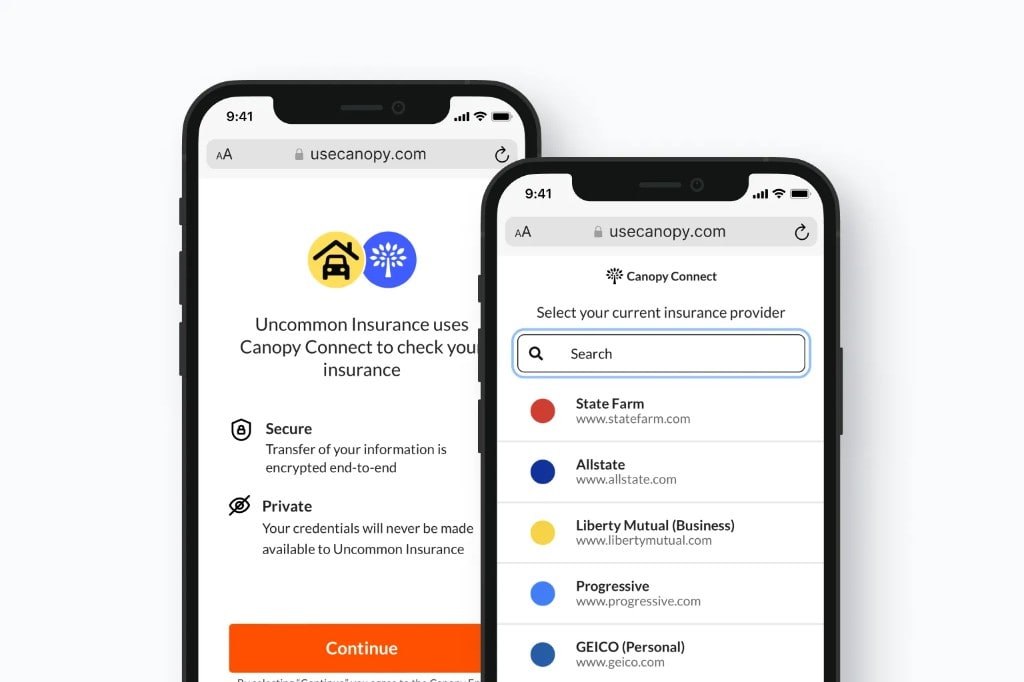
FAQ
Compare Auto Quotes
Get quotes from multiple carriers. Compare coverage and rates in minutes.
Get a QuoteDon’t have time to run a quote? Just send us your policy.
Share your current declarations page with us in two clicks. Takes about 30 seconds. We'll review your coverage, check for gaps, and compare our carriers to your current policy.
Connect your policy